News
Ombudsman supports changes to the Penal Code for stricter measures against crimes against children
19 February 2026
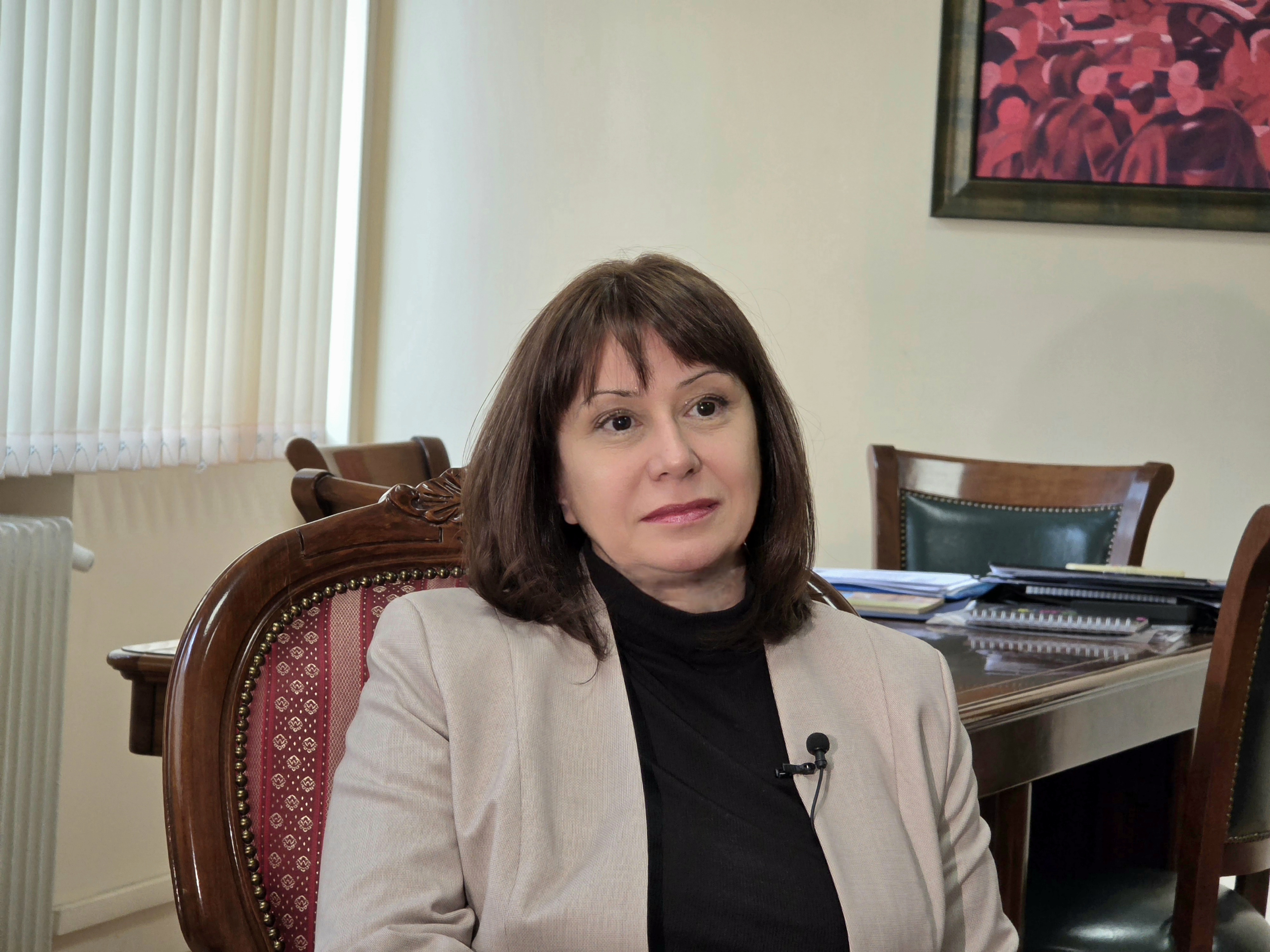
Ombudsman Velislava Delcheva sent an opinion to the Ministry of Justice on the bill amending and supplementing the Penal Code, aimed at strengthening the criminal law protection of children as a particularly vulnerable group. She emphasises that the proposals are in line with the Constitution of the Republic of Bulgaria, international standards for child protection and the evolving European legal framework, and that they reflect the need to modernise criminal legislation in the context of global digitalisation and the development of information and communication technologies.
The Ombudsman welcomes the proposed changes relating to limitation periods, which would start from the date on which the victim reaches the age of majority. She is adamant that this guarantees a real opportunity for child victims to exercise their rights and addresses the practical difficulties arising from immaturity, dependence, and fear, which often prevent the timely reporting of crimes.
The public defender also highlights the need to overcome shortcomings in the transposition of European directives, including those relating to victim protection.
In her opinion, Delcheva notes that technological advances and the use of artificial intelligence pose additional challenges for law enforcement agencies, especially in cases of crimes against children, including the recording and distribution of violence in an online environment.
The Ombudsman also supports the proposal for heavier penalties for crimes against children under the age of 10, pointing to the higher degree of vulnerability and inability to defend themselves of this age group.
She emphasises that such an approach is consistent with the principles of fairness and proportionality and reflects legislative trends in a number of European countries.
In her opinion, the Ombudsman positively assesses the further development of the system of qualifying characteristics for crimes against the sexual inviolability of minors. At the same time, however, she stresses the need for precision in legal concepts.
"In the part where the hypothesis that the act has caused 'significant harmful consequences for the physical, mental, or moral development of the victim' is introduced as a qualifying criterion, it should be borne in mind that the concept of 'moral development' is value-laden and culturally conditioned," writes the Ombudsman.
And she warns that while the harm to physical and mental development can be established through relevant expert opinions, the harm to moral development is difficult to establish through the means of evidence used in criminal proceedings.
"Furthermore, the use of moral categories creates a risk of inconsistent application, subjectivity, and broad interpretation, which could undermine the principle of legal certainty and fail to achieve the goal of strengthening the protection of vulnerable children," warns the public defender.
According to her, the issue of moral consequences remains unclear and may create a risk of unequal application and difficulties in proving guilt in criminal proceedings.
In conclusion, the Ombudsman considers the proposed amendments to be an important step towards improving the legal protection of children, emphasising the importance of effective and fair implementation of the new provisions.
OMBUDSMAN'S RECEPTION-ROOM
- address: 22 George Washington str.,
1202, Sofia - phone: (+359 2) 810 6955; fax: (+359 2) 810 6963
- e-mail: priemna@ombudsman.bg
PRESS CENTER OF THE OMBUDSMAN
- phone: (+359 2) 810 6913
- e-mail: press@ombudsman.bg