News
Ombudsman recommends to ensure free city public transport services to children under 14
20 August 2026
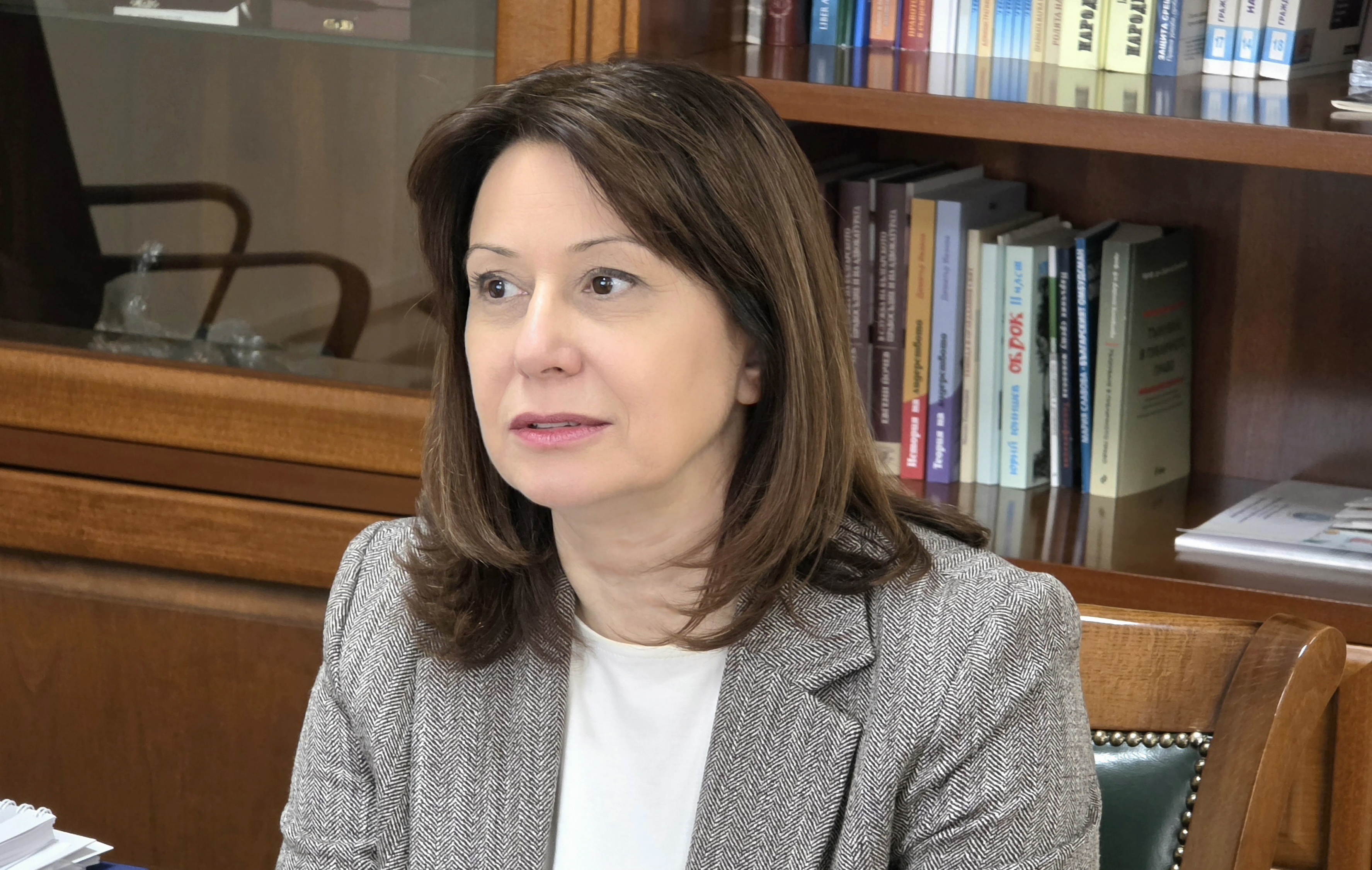
Ombudsman Velislava Delcheva notified Georgi Peev, Minister of Transport and Communications, of a recurrent problem in the exercise of the right of children under 14 to travel free on city public transport services throughout the country.
The letter was sent to respond to complaints lodged with the Ombudsman Institution and reporting cases of children who hold smartcards that were delivered in a certain metropolitan area and who were made to buy a ticket when they used public transport in another area and sometimes were even asked to get off if they did not have money for the ticket. The reason given was that the local reading devices are unable to validate cards delivered by a different jurisdiction.
In practice, the technological incompatibility between the transport systems of individual municipalities creates different conditions for exercising one and the same right. In some cases, parents are asked to visit local points to get additional cards even though the child already holds an officially approved card. Restrictions are posed concerning residence or domicile address.
The problem is particularly obvious in smartcards where some of the data needed to verify the right to free travel are not physically recorded on the plastic but are contained in the internal computer system of the municipal authority that issued it. Thus, it becomes practically impossible to verify the validity of the card in another municipal area.
The consequences are conflict situations, sanctions and cases where children find themselves in a situation of stress and uncertainty caused by technical restrictions for which they and their parents are not to be blamed.
“It can be concluded that although the regulation is one for all, local transport companies enforce different conditions that are impediments to people,” the Ombudsman points out.
Velislava Delcheva refers to Order No. RD-08-14/09.01.2024 of the Minister of Transport and Communications reading: “Children aged between seven and fourteen shall use freely city public transport services throughout the country subject to being holders of a card in accordance with the template in the appendix to this Order or of a smartcard.”
Thus, the Ombudsman recommends that the Ministry of Transport and Communications should take action to address the regulatory, administrative and technological restrictions to the exercise of this right.
Some of the proposals include legal precision of the rules to ensure that a child who already holds an official standard card will not be asked to acquire an extra local document and that national smartcard standards will be established so that they can be recognized and verified by validators throughout the country.
Further the Ombudsman proposes that the Road Transport Administration Executive Agency should carry out inspections on the operations of municipal transport companies and take action when illegitimate restrictions are identified.
The Ombudsman emphasizes that the right to free travel is universal and guaranteed by the central government and shall not be limited by local rules, requirements for domicile or refusal to recognize a nationally approved card.
“I believe that your intervention will ensure that the national budget funds are used for the purpose they are intended so as to ease citizens rather than put up new restrictions. To deprive a child of the right to transport due to software or address inconsistencies is a direct violation the child’s interest and social rights,” Velislava Delcheva emphasizes.
OMBUDSMAN'S RECEPTION-ROOM
- address: 22 George Washington str.,
1202, Sofia - phone: (+359 2) 810 6955; fax: (+359 2) 810 6963
- e-mail: priemna@ombudsman.bg
PRESS CENTER OF THE OMBUDSMAN
- phone: (+359 2) 810 6913
- e-mail: press@ombudsman.bg