News
Ombudsman Velislava Delcheva attends key European meetings on citizens’ rights protection in Brussels
22 November 2025
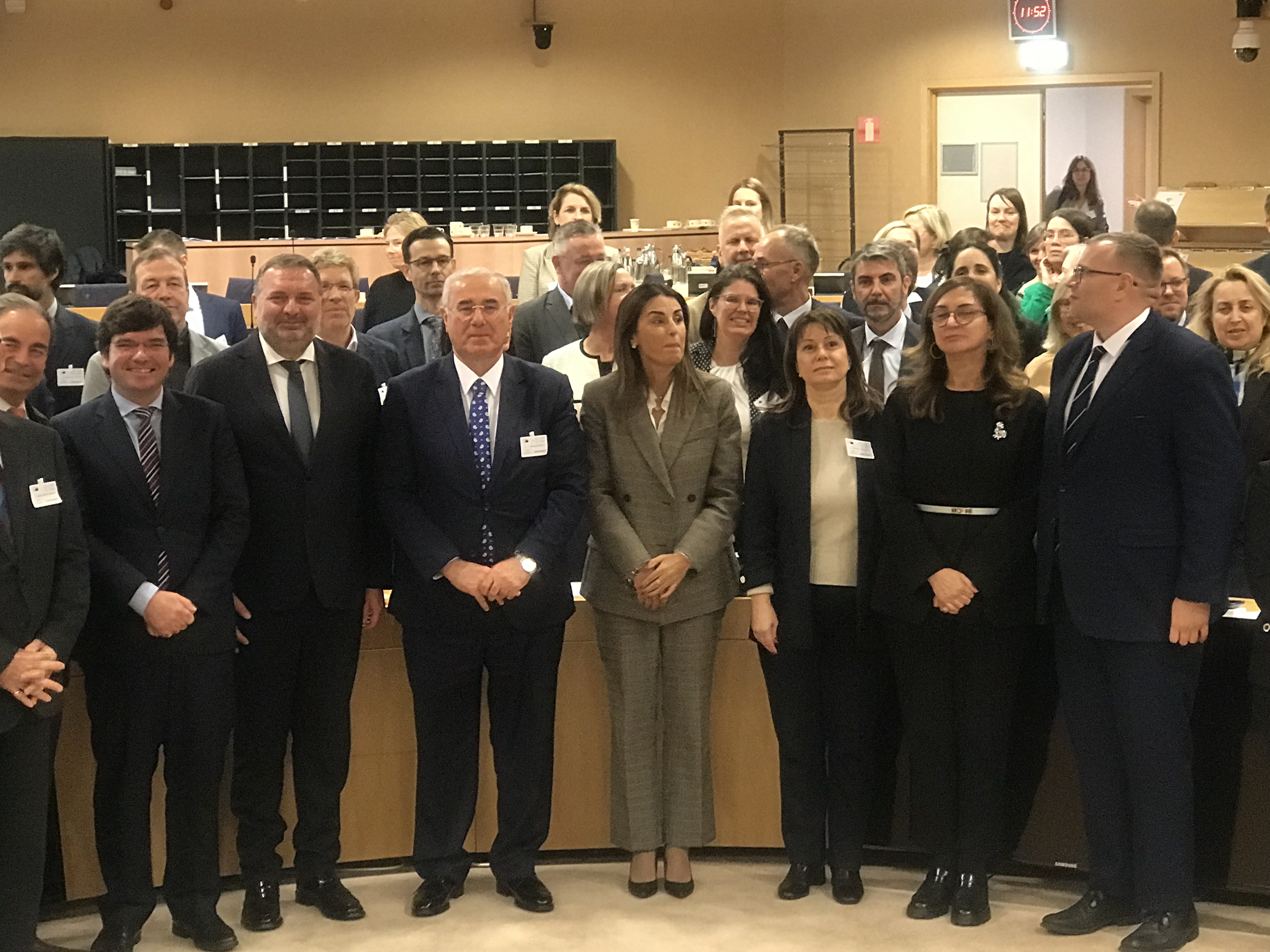
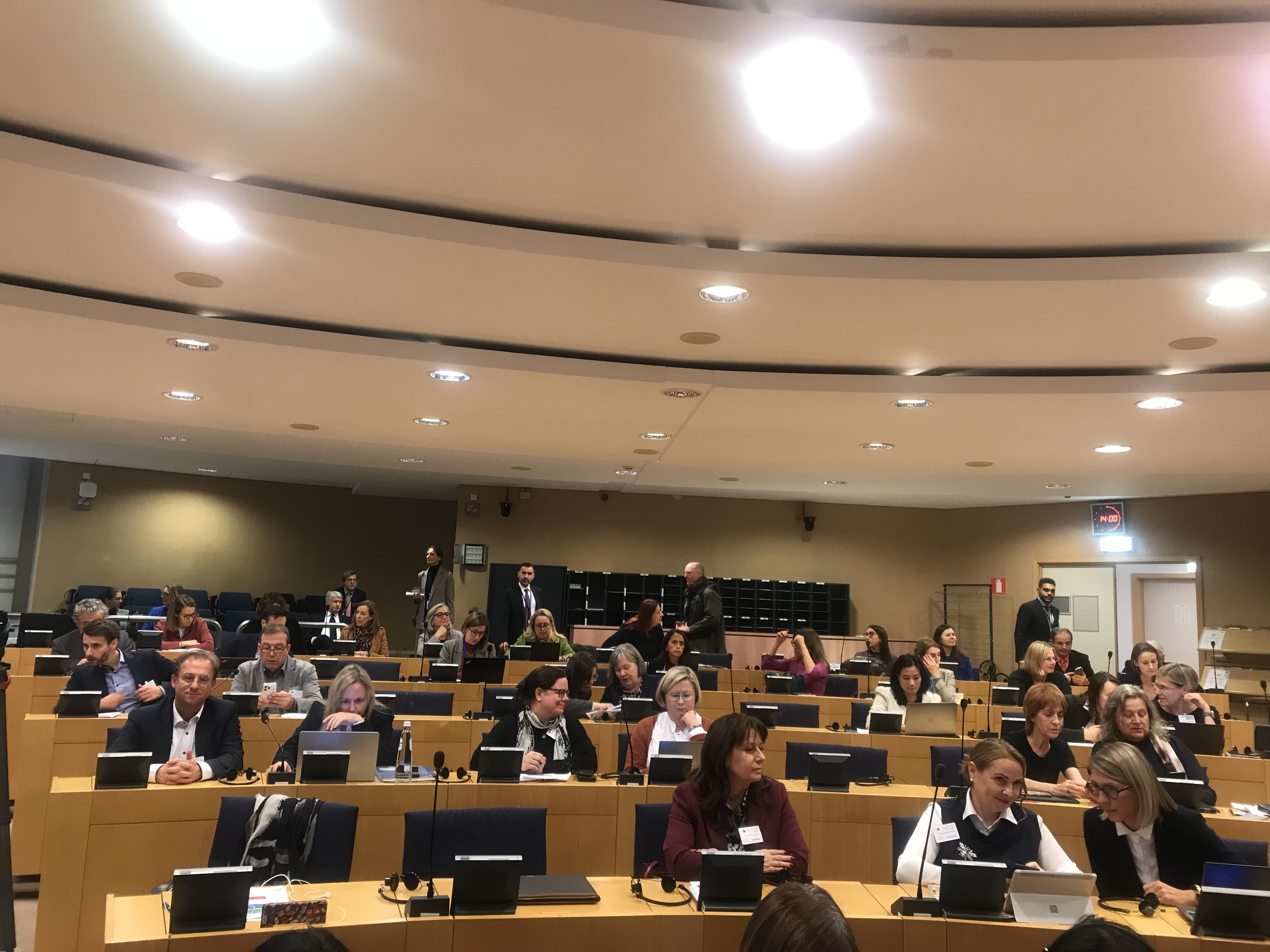
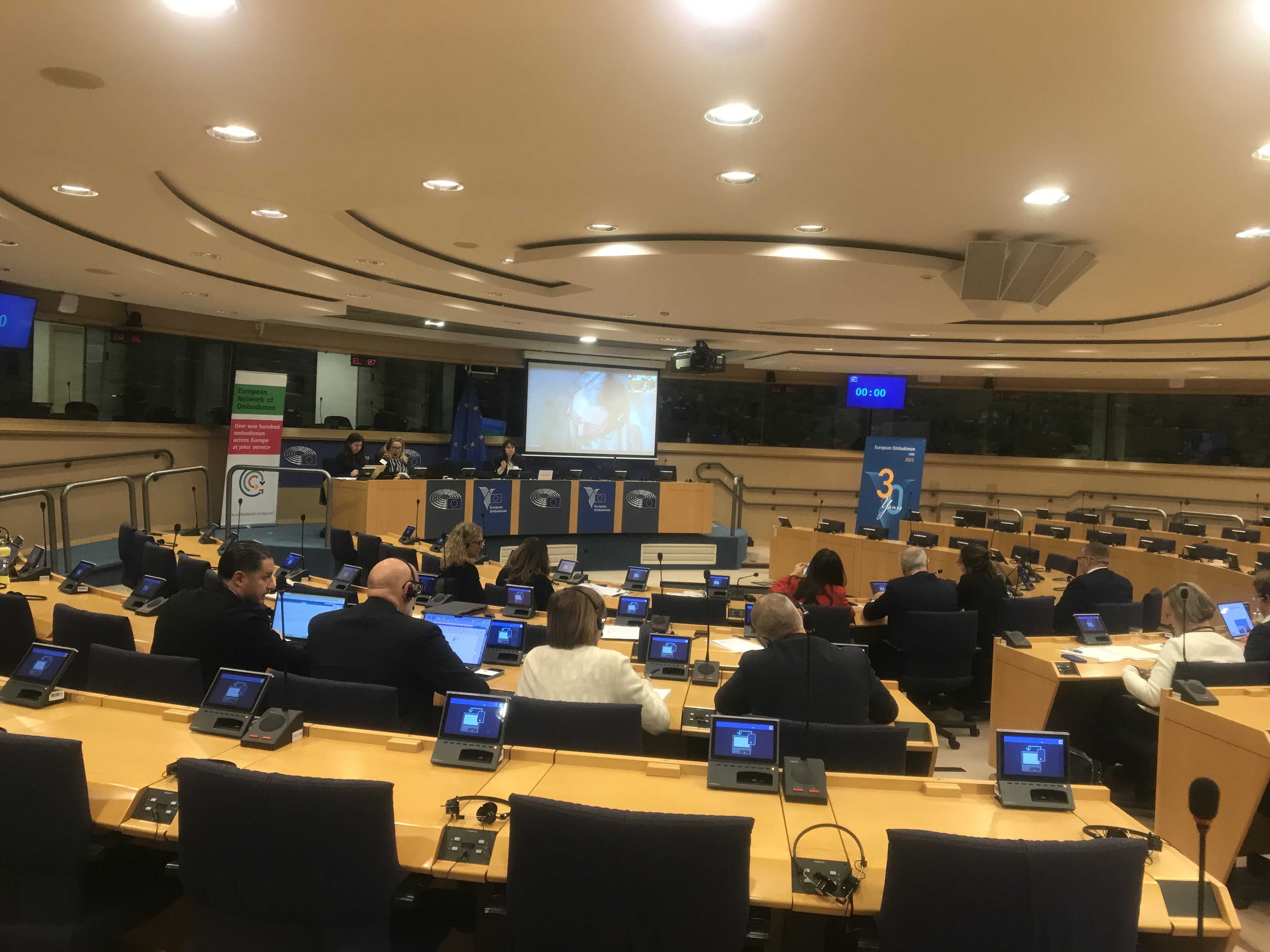
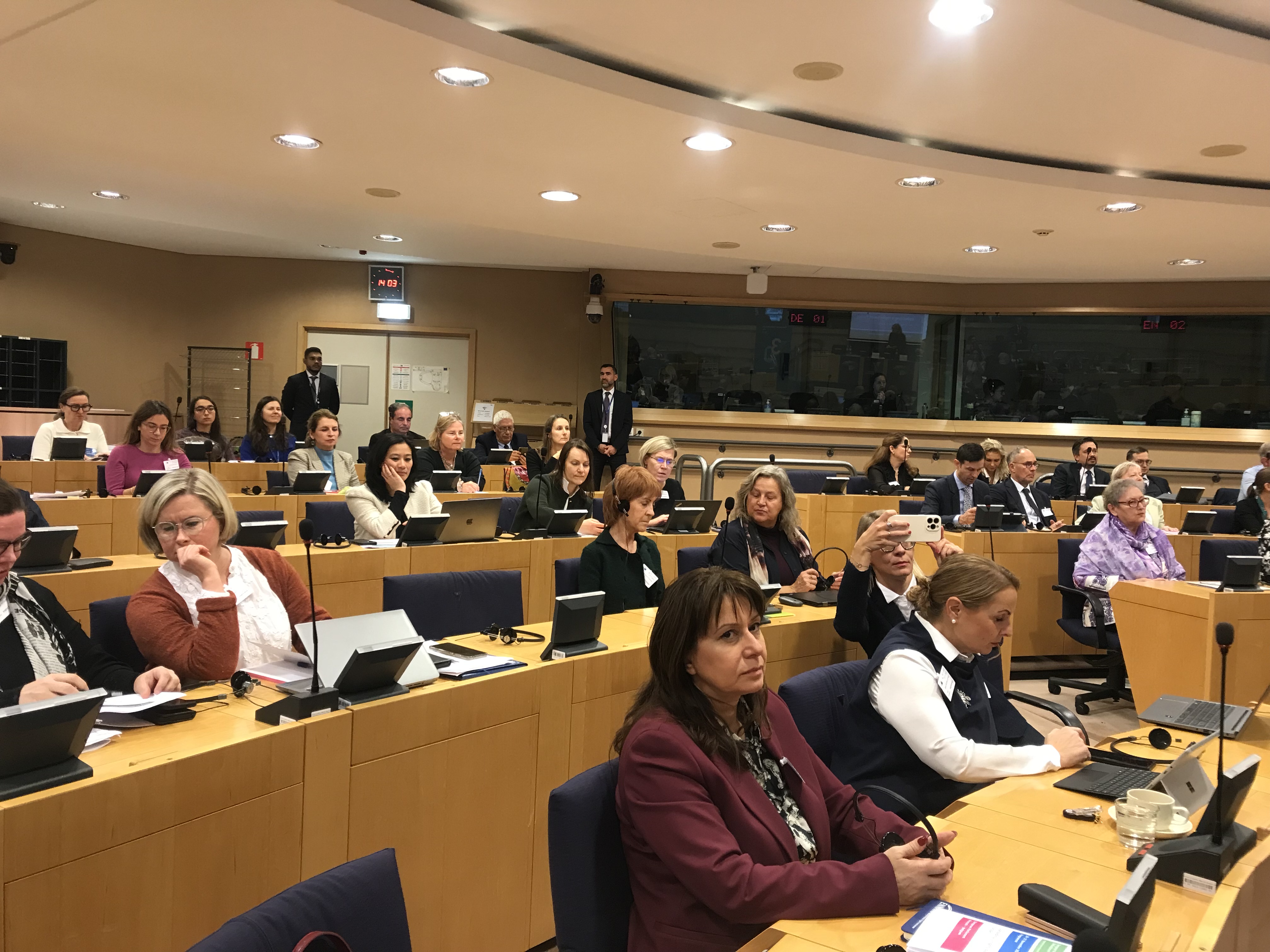
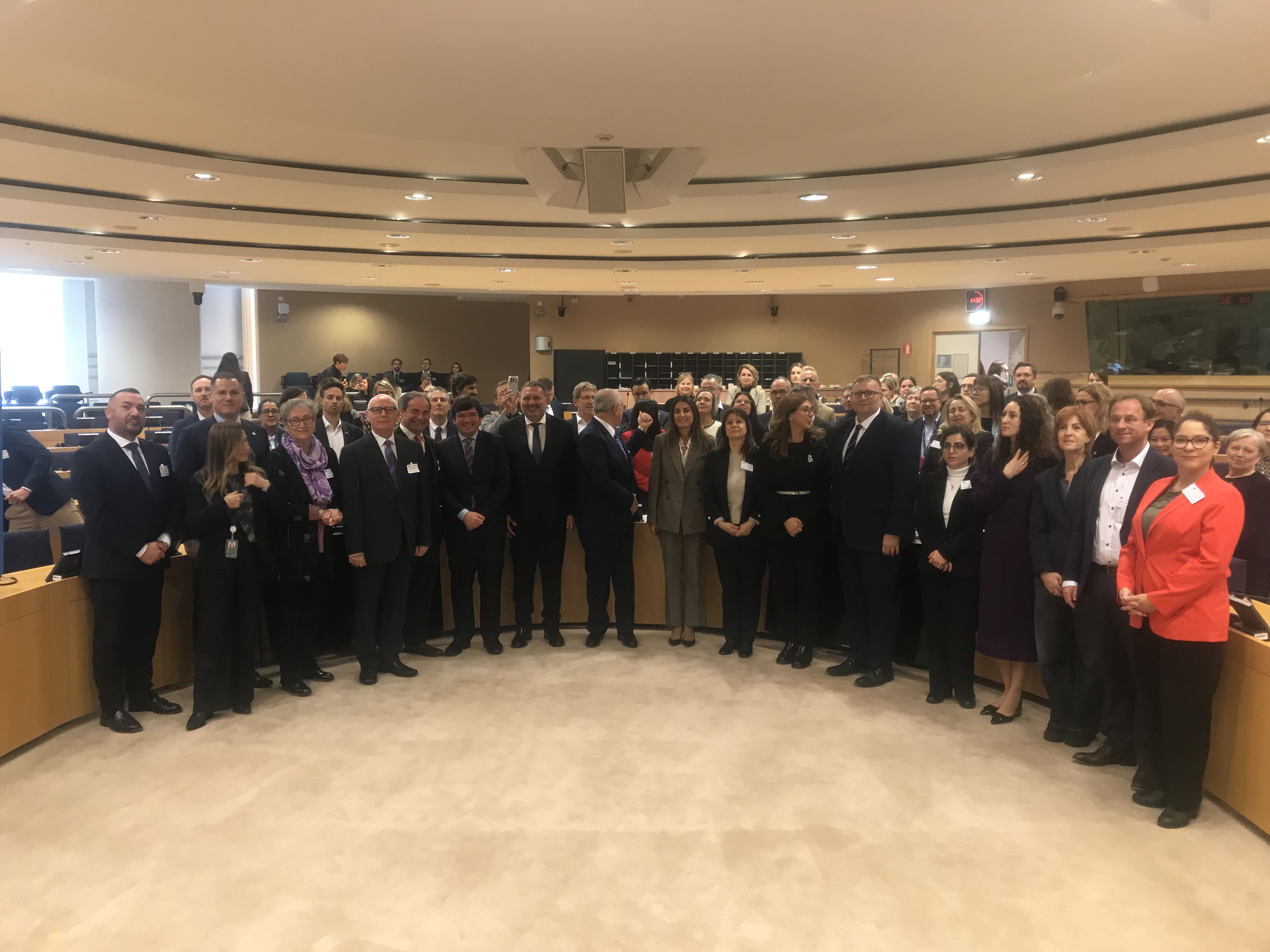
Ombudsman Velislava Delcheva attended two of the major annual events regarding human rights institutions in Europe: the Annual Conference of the European Network of Ombudsmen “Upholding a Rights-Based Europe” and the Annual General Meeting of the European Network of National Human Rights Institutions. The events took place on 20–21 November 2025 in Brussels and brought together the heads of institutions from across the continent.
The discussions focused on some of the most important present-day challenges facing the protection of the rights of citizens in the European Union: the freedom of movement and the real obstacles that confront it; the efficiency of the monitoring on the enforcement of European legislation; ensuring the independence of the ombudsman institutions; expansion of control over private entities that deliver public services; environmental protection and the handling of complaints regarding environmental issues; the role of ombudsmen in the field of migration and asylum; the impact of the simplification of regulations on the quality of protection.
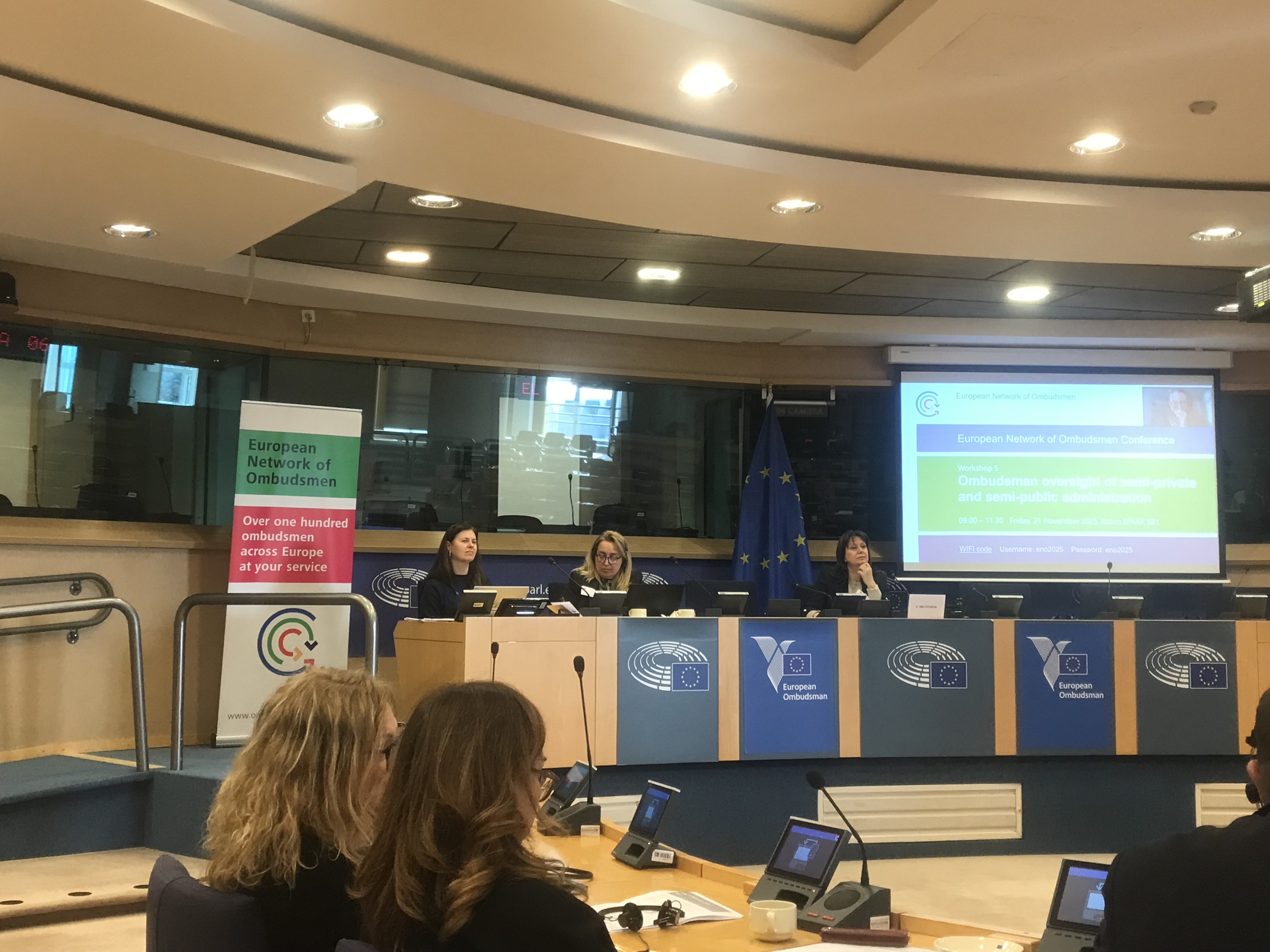
Velislava Delcheva moderated the workshop on the ombudsman oversight of private companies that deliver public services and this is an issue that is of growing concern in Europe.
The discussion was attended by heads of institutions from Austria, Italy, Slovakia, Albania, Türkiye, Georgia and other countries.
The discussion touched on the challenges in the exercise of control on private delivery; the risks and advantages of the vestment of the ombudsman with broader powers; the protection that citizens expect regardless of whether the offender is a public or private entity.
The meeting of national human rights institutions discussed priorities regarding the sustainability of these authorities, the need for stronger support from the public sector and the implementation of innovations and new technologies in their activity.
Velislava Delcheva contributed actively to a discussion on the risks posed to citizens’ rights in the rapid digitalization of public and private services.
“Digital solutions can speed up the delivery of services but if they are not sensitive to rights, they exclude people and generate new inequalities, Velislava Delcheva said.
She stressed that 25–30% of senior citizens, poor households and people in remote areas do not use Internet regularly; the algorithmic systems in the public administration pose a risk of algorithmic discrimination; the absence of transparency and errors in the digital data may result in the withdrawal of rights and payment of higher fees that are not due.
The Ombudsman sounded an alarm that more and more citizens complain as they report “digital exclusion”, that is when automated systems deny them access to services without human intervention.
The European ombudsmen put an accent, inter alia, on emerging digital rights – such as the right to make an error, the right to be forgotten and the right to non-digital communication.
“It is the task of the ombudsman to protect people where technology can become a barrier rather than help,” Velislava Delcheva said.
OMBUDSMAN'S RECEPTION-ROOM
- address: 22 George Washington str.,
1202, Sofia - phone: (+359 2) 810 6955; fax: (+359 2) 810 6963
- e-mail: priemna@ombudsman.bg
PRESS CENTER OF THE OMBUDSMAN
- phone: (+359 2) 810 6913
- e-mail: press@ombudsman.bg