News
Ombudsman Velislava Delcheva calls for urgent measures to protect restitution rights to agricultural land
20 May 2026
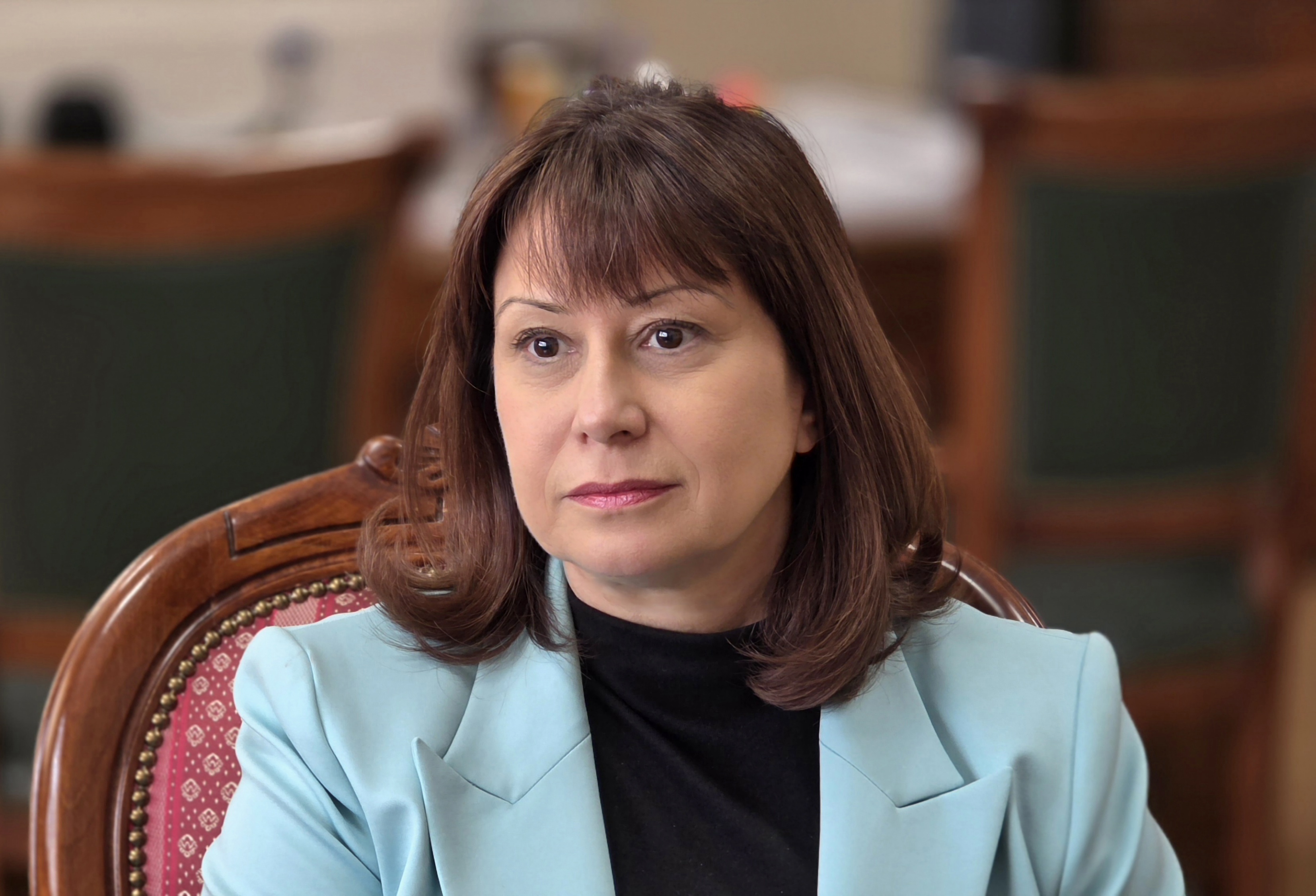
Ombudsman Velislava Delcheva sent an opinion to the Chairperson of the 52nd National Assembly Mihaela Dotsova, the Minister of Agriculture and Food Plamen Abrovski, the Minister of Justice Nikolay Naydenov, and the Chairman of the Executive Board of the National Association of Municipalities Daniel Panov, in which she calls for urgent legislative and organisational measures related to the protection of citizens’ recognised restitution rights following the expiration of restrictions on the disposal of land from so-called “residual land fund.”
The position emphasises that the lifting of restrictions on the disposal of land under Article 19 of the Ownership and Use of Agricultural Land Act creates a risk of further reduction in the land resources intended for the completion of restitution and compensation procedures.
“The lifting of the restriction on the disposal of land from the residual land fund reduces the guarantees that citizens will receive land in accordance with the acts recognizing their rights granted by the state,” emphasises Ombudsman Velislava Delcheva.
In her opinion she notes that the lifting of previous restrictions in 2010 was followed by a massive sell-off of land from the residual land fund, which warranted the imposition of two consecutive moratoriums in 2015 and 2020. According to the Ombudsman, a historical review clearly shows that any liberalisation of the regime while the issue with land restitution remains unresolved results in reducing the land necessary to satisfy citizens’ recognised rights.
According to the Ombudsman, it is particularly alarming that the registers under Article 19 of the Ownership and Use of Agricultural Land Act continue to list properties with a recognised right to restitution within their original boundaries, as well as lands that are actually possessed and cultivated by their owners, but are formally registered as municipal property. This creates a risk of disposal transactions involving properties for which restitution procedures have not been finalised.
Delcheva also draws attention to the established case law of the Supreme Court of Cassation, according to which lands with a recognised right to restitution within their original boundaries do not fall within the scope of Article 19 of the Ownership and Use of Agricultural Land Act and cannot be treated as part of the residual land fund.
“When the municipality enters into disposal transactions involving privately owned land that has been unlawfully included in the residual land fund, the likelihood of conflicts arising and of owners becoming embroiled in legal disputes increases, and legal certainty and the constitutional principle of the rule of law are undermined,” warns Velislava Delcheva.
In her opinion she further emphasises that the delay in land restitution has already been qualified by the European Court of Human Rights (ECHR) as a systemic problem involving excessive interference with the right to property. It is noted that the ECHR’s rulings on the matter are under close scrutiny by the Committee of Ministers of the Council of Europe, and that the recommended general measures for setting deadlines and establishing safequards have not yet been implemented.
“The continued failure to enforce the decisions of land ownership authorities and court rulings is characterised by the ECHR as a systemic violation of Article 1 of Protocol 1 to the Convention for the Protection of Human Rights and Fundamental Freedoms due to excessive interference with the right to property,” the opinion further notes.
The Ombudsman recommends reinstating the restrictions on land disposal under Article 19 of the Ownership and Use of Agricultural Land Act, setting a deadline for the completion of land restitution, a review of the protocols for determining the remaining land fund, and acceleration of the legislative amendments provided for in Bill No. 47-202-01-31/02.06.2022.
According to Velislava Delcheva, the protection of the recognised restitution rights and the completion of land restitution are not only a matter of lawful compliance but also of restoring public trust in the State and the principles of the rule of law.
OMBUDSMAN'S RECEPTION-ROOM
- address: 22 George Washington str.,
1202, Sofia - phone: (+359 2) 810 6955; fax: (+359 2) 810 6963
- e-mail: priemna@ombudsman.bg
PRESS CENTER OF THE OMBUDSMAN
- phone: (+359 2) 810 6913
- e-mail: press@ombudsman.bg