News
Ombudsman: Voluntary out-of-court collection of small debts can help citizens, but only if there are clear safeguards to protect vulnerable people
16 June 2026
Ombudsman Velislava Delcheva supported, in principle, the idea of introducing a procedure for voluntary out-of-court debt collection, but insisted that legislative amendments to the Private Enforcement Agents Act should focus on protecting the rights of debtors, especially the most vulnerable groups—the elderly, people with disabilities, recipients of social assistance, and low-income citizens.
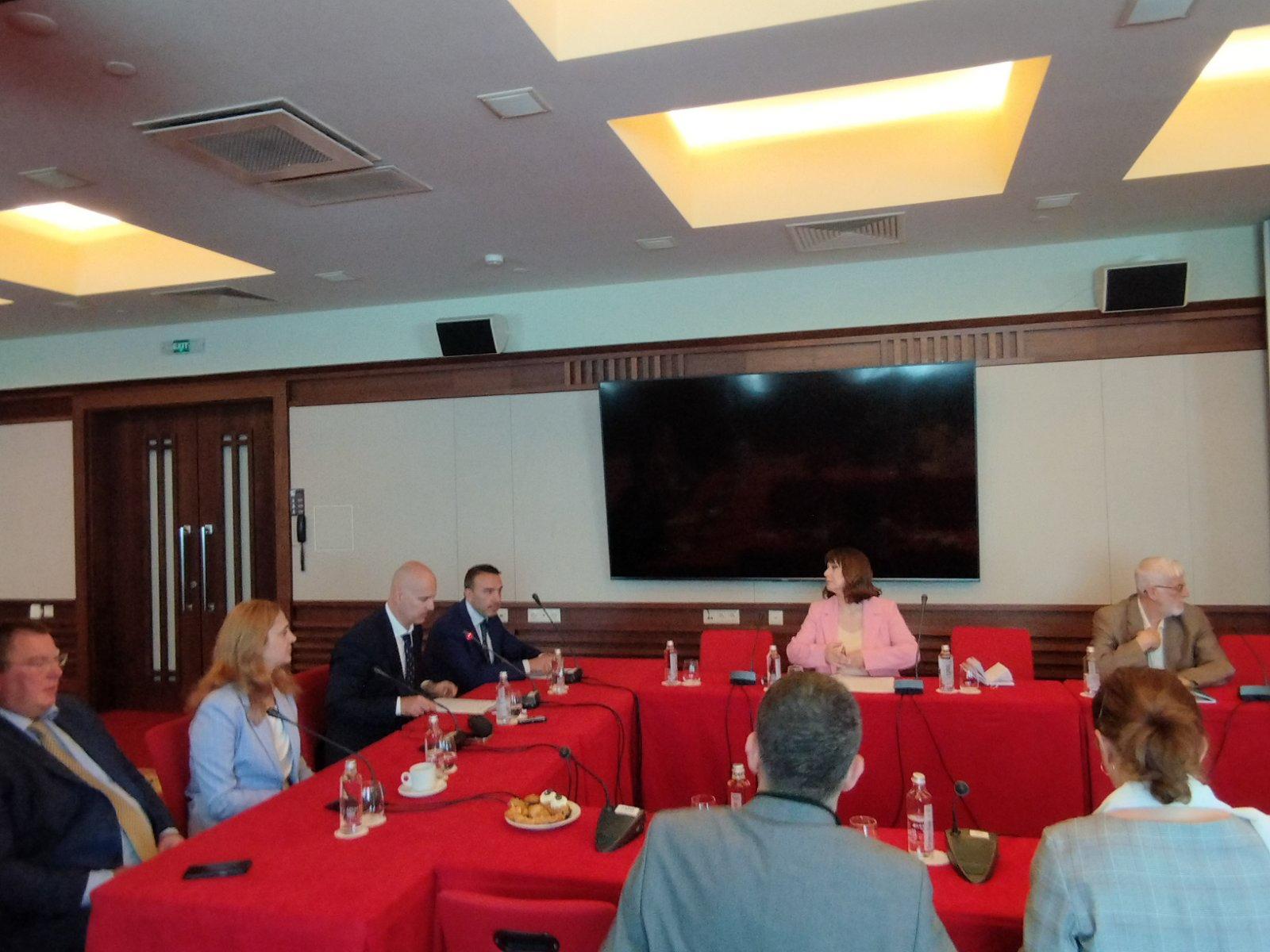
Delcheva presented her position during a working meeting organised by the Chamber of Private Enforcement Agents, dedicated to proposals for introducing a procedure for voluntary out-of-court debt collection.
“The introduction of a procedure for voluntary out-of-court debt collection is very timely and urgent. Based on the complaints we receive at our institution, we have seen that there are many debtors with small debts. They get caught up in a cycle of court cases and, later, enforcement proceedings, which significantly increase their debts. Initiating such a procedure could resolve precisely this problem,” stated the Ombudsman.
According to Delcheva, however, the law must clearly define the types of debts to which the procedure will apply. In her view, it is most suitable for small claims and debts owed to utility providers, including district heating companies, water and sewerage operators, and other public service providers, since it is precisely in these cases that additional costs and burdens most often accumulate for citizens.
The Ombudsman also stressed the need for an explicitly guaranteed right to legal aid for debtors, especially when it comes to people in vulnerable situations.
“It is essential that citizens be informed of their right to free or subsidised legal aid at the very beginning of the procedure and have sufficient time for consultation before deciding whether to participate in it,” Delcheva noted.
She proposed that, before the proceedings begin, a check be conducted to determine whether the debtor is in a vulnerable situation—such as a person over 65, a person with a disability, a recipient of social assistance, or a person with a serious health condition. In such cases, additional safeguards for protection and access to legal aid should be provided.
Delcheva was adamant that the voluntary nature of the procedure must be clearly and unambiguously guaranteed. In her view, the debtor must be explicitly informed that they have not been convicted, that no enforcement proceedings have been initiated against them, and that their participation in the procedure is entirely voluntary.
She further pointed out that debtors should play a more active role in the process—by participating in setting the terms for installment payments.
“People must be well informed about their rights and options. They must have the right to opt out of the procedure if they believe they do not owe the debt, as well as the ability to determine the amount of their installment payments according to their means,” stated the Ombudsman.
Delcheva’s recommendations also include a ban on seeking out debtors at their workplace, a ban on contacting them through relatives and close friends, restrictions on contact during inconvenient hours, and a prohibition on practices that undermine citizens’ dignity.
The Ombudsman also insisted that a mandatory verification of the existence and amount of the debt be introduced before proceedings begin, to prevent citizens from being pressured to pay debts they do not owe.
“Upon termination of the procedure, it must be made clear that this will have no consequences for the debtor in the event of any subsequent legal proceedings or potential enforcement,” Delcheva further stressed.
In her view, the proposed mechanism could be a useful tool for preventing the accumulation of additional costs and for the faster settlement of small debts, but only if the legislation provides sufficient safeguards against abuse and prioritises the protection of citizens’ rights, especially those of vulnerable groups.
OMBUDSMAN'S RECEPTION-ROOM
- address: 22 George Washington str.,
1202, Sofia - phone: (+359 2) 810 6955; fax: (+359 2) 810 6963
- e-mail: priemna@ombudsman.bg
PRESS CENTER OF THE OMBUDSMAN
- phone: (+359 2) 810 6913
- e-mail: press@ombudsman.bg