News
The Ombudsman discussed measures to make elections more accessible for people with disabilities with the leadership of the Central Election Commission
9 July 2026
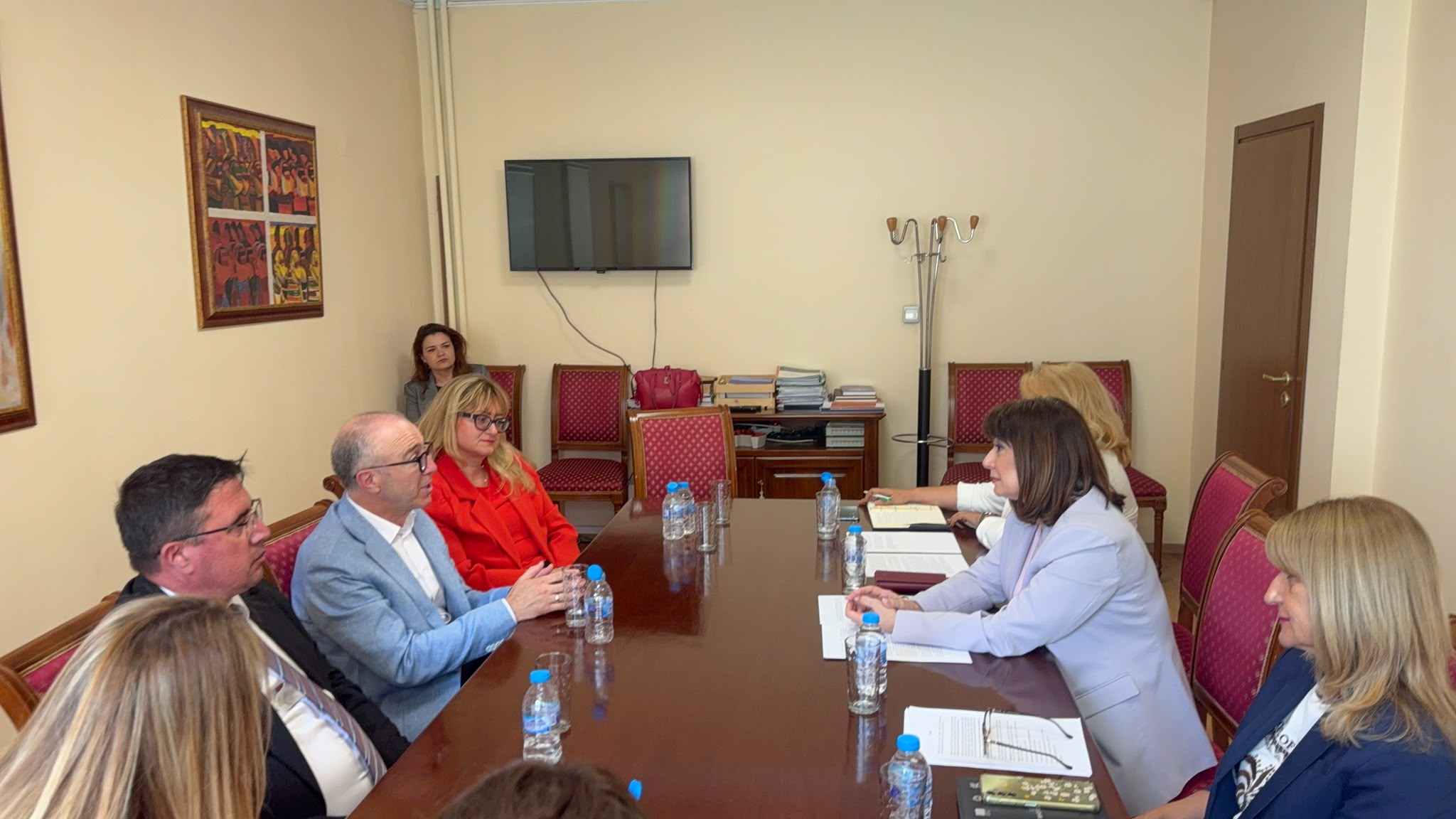
Ombudsman Velislava Delcheva held a meeting with the Chair of the Central Electoral Commission Georgi Horozov, the Deputy Chairs Margarita Mahaeva and Ismail Osman, the Secretary Yordanka Gancheva, and members of the Commission.
The main topic of discussion was ways of improving the accessibility of the election process for people with disabilities ahead of the forthcoming presidential elections. The meeting acknowledged the good cooperation between the two institutions to date, one result of which was the introduction of tactile templates for blind citizens at 400 polling stations during the last elections. The measure was implemented following a recommendation by the Ombudsman.
Velislava Delcheva emphasised that the meeting was timely, as the Election Code is currently open to amendments. The Chair of the Central Election Commission Georgi Horozov also noted that the discussion was taking place at an opportune moment precisely because of the ongoing debate on changes to election legislation. In his view, this creates an opportunity for proposals to improve the accessibility of the election process to be examined and discussed.
During the meeting, the Ombudsman highlighted the main issues on which citizens with disabilities continued to raise concerns with the Institution.
Delcheva discussed with the Central Election Commission the possibility, despite the short timeframe before the elections, of taking the necessary measures to ensure that all Bulgarian citizens, regardless of the nature and severity of their disability or their state of health, could exercise their right to vote on an equal footing.
During the meeting, the Ombudsman proposed that the Central Election Commission draw up an ‘Accessible Polling Station’ standard, setting out specific rules and measures to ensure an accessible polling environment. Among the proposals is that the methodological guidelines for section election commissions should include requirements for preparing the area around polling stations, such that polling stations designated for people with visual impairments or mobility difficulties are provided with an audio player and a Braille template listing the candidates and parties.
It is also proposed that access to an online sign language interpreter be provided for people with hearing impairments who require assistance, that a system for visual notification be introduced when printing the receipt, and that a freephone number be set up to provide information on the voting process.
The Ombudsman recalled that the ideas behind the ‘Accessible Polling Station’ model had been discussed with organisations representing people with sensory disabilities, the leadership of the Central Election Commission and representatives of the caretaker government prior to the parliamentary elections in April.
“As Ombudsman, it is important for me to hear from the CEC leadership on how we can continue our cooperation so that the ‘Accessible Polling Station’ model can function effectively for the upcoming presidential elections,” emphasised Velislava Delcheva.
OMBUDSMAN'S RECEPTION-ROOM
- address: 22 George Washington str.,
1202, Sofia - phone: (+359 2) 810 6955; fax: (+359 2) 810 6963
- e-mail: priemna@ombudsman.bg
PRESS CENTER OF THE OMBUDSMAN
- phone: (+359 2) 810 6913
- e-mail: press@ombudsman.bg