News
The Ombudsman supports the removal of restrictions on polling stations abroad and has issued recommendations to the Central Election Commission for an accessible electoral process
15 July 2026
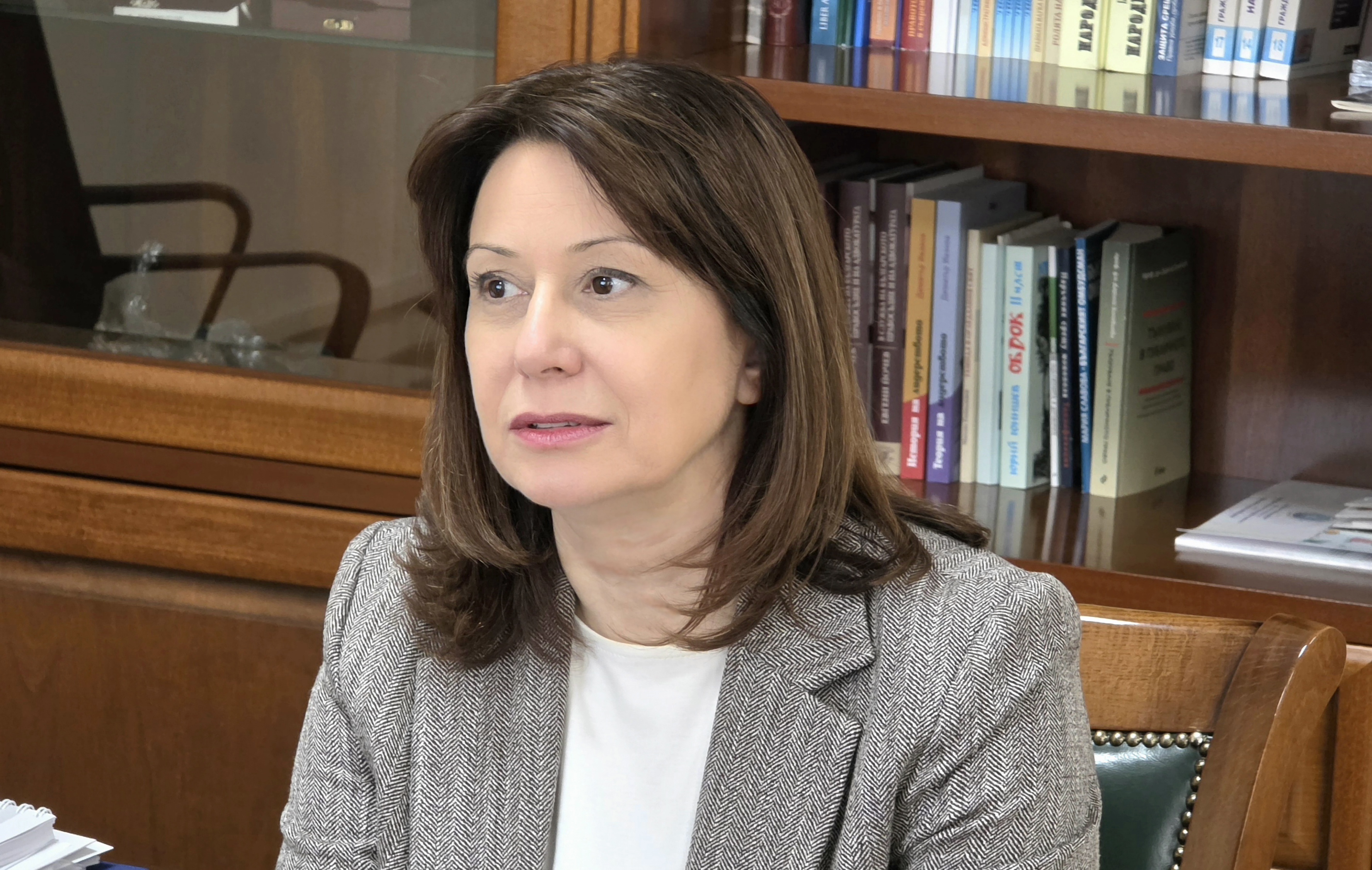
Ombudsman Velislava Delcheva supports the bills proposed and adopted by the Legal Affairs Committee to amend the Election Code, rejecting the restriction on the number of polling stations in countries outside the European Union.
This statement is in connection with the proposed amendments to Article 14 of the Election Code, which provide for the removal of the restrictive provisions adopted by the previous, 51st National Assembly.
Even during the discussion of the restrictions, Velislava Delcheva submitted a statement to Parliament after being contacted by election organisers and voters in the United Kingdom, the United States, and Canada. Bulgarian citizens abroad expressed their strong opposition to the drastic reduction in the number of polling stations outside the European Union.
The statement details their arguments that such a restriction is not justified by technical or organisational necessity, and that its implementation would lead to a serious deterioration of the electoral process and effectively deprive tens of thousands of Bulgarian citizens of the opportunity to exercise their right to vote.
The Bulgarian community in the United Kingdom would be particularly affected, where, based on the number of voters in the last election, the workload at a single polling station could reach about 1,000 voters.
Following the adoption of the restrictive provisions, the Ombudsman Institution received additional complaints, including requests to refer the matter to the Constitutional Court.
“I find it unacceptable that Bulgarian citizens living abroad who have already cast their votes in previous elections should be hindered or even deprived of that right in subsequent elections,” stresses Ombudsman Velislava Delcheva.
This view is in accordance with Article 26, paragraph 1 of the Constitution, which states that Bulgarian citizens, wherever they may be, have all the rights and obligations under the Constitution, as well as the right, guaranteed by Article 42, to elect state and local authorities and to participate in referendums.
Velislava Delcheva reaffirms her position that the Election Code must guarantee the unimpeded exercise of the right to vote as a fundamental constitutional right in a democratic state governed by the rule of law. This right can be exercised only through voting; therefore, restricting it or imposing legislative obstacles to voting is unacceptable.
It is particularly important to ensure, through legislation, that citizens are able to freely and peacefully exercise their right to vote, including by establishing a sufficient number of polling stations abroad.
The Ombudsman calls on members of parliament to respect the constitutionally guaranteed rights of voters when debating and voting on bills, and to prevent any restriction of citizens’ fundamental rights.
Along with her stance on the legislative changes, Velislava Delcheva issued a recommendation to Georgi Horozov, Chair of the Central Election Commission, to take specific measures to guarantee the voting rights of people with disabilities and citizens in vulnerable situations.
The recommendation notes that a significant portion of people with disabilities may once again be left without adequate access to the election process. Appropriate conditions have not yet been established for these citizens, and the requirements of a number of international instruments to ensure universal, equal, and secret voting through an equitable procedure that guarantees freedom of the vote have not been fully met.
The Ombudsman recalls the recommendations of the UN Committee on the Rights of Persons with Disabilities dated 21 September 2018, calling on Bulgaria to ensure that all adults with disabilities are able to exercise their right to vote and to be elected.
Among the recommendations are the provision of election information in accessible formats, including through the Easy Read method, as well as the allocation of financial and technical resources to improve the physical accessibility of polling stations.
These findings and recommendations are also reflected in the report of the European Economic and Social Committee on access to European Parliament elections for citizens with disabilities in the European Union, published on 6 March and adopted at an EESC session on 20 March 2019.
Among the main issues that citizens bring to the Ombudsman’s attention are the lack of sign language interpretation for people with hearing impairments when problems arise with the electronic voting machines and the lack of a visual signal when the receipt is printed.
This makes it difficult for people with hearing impairments to exercise their right to vote and creates conditions for the machines to jam and their votes to go uncounted. To date, no action has been taken either to adapt the machines or to establish a suitable procedure whereby members of the polling station election commissions would signal by hand when the machine emits an audible signal.
Appropriate training is also necessary for members of the Sectional Election Commissions, including those with hearing impairments.
Another major problem is that official information about the voting process is still not available at polling stations in Braille or in accessible audio formats. The secrecy of the vote for blind citizens cannot be fully guaranteed, as no steps have been taken to adapt the voting machine software to the needs of people with visual impairments.
Due to the large number of complaints received, a meeting was held on 3 April 2026, at the invitation of Velislava Delcheva, with representatives of organisations for people with sensory disabilities, the Central Election Commission, and the Ministry of e-Government.
The purpose of the meeting was to discuss ways to ensure that all adults with disabilities can exercise their right to vote and to be elected.
On the eve of the parliamentary elections scheduled then, the participants discussed the readiness of state institutions and local authorities to ensure an accessible electoral environment and adequate voting conditions for people with disabilities. Emphasis was placed on the need for accessible information, digital solutions, and physical assistive devices to guarantee the secrecy of the vote and the right to an informed and independent choice.
Among the proposals made for blind and visually impaired voters are the provision of Braille templates at polling stations with fewer than 300 voters, audio instructions for machine voting, and accessibility of the software on the CEC website for screen readers.
For voters who are deaf or partially deaf, proposals included professional sign language interpretation during election campaigns, video instructions on how to vote, and the presence of interpreters at key polling stations.
The need for an information campaign featuring materials in accessible formats—including audio, large print, and videos with captions—to explain citizens’ rights and voting deadlines was also discussed.
Among the proposals is the development of guidelines for a specific approach to serving voters with sensory disabilities, as well as appropriate training for members of the Election Commission with hearing impairments.
In her recommendation to Georgi Horozov, the Ombudsman proposes that the Central Election Commission develop a standard for “Accessible Polling Station” and take the following actions:
1. The Central Election Commission’s methodological guidelines for sectionional election commissions throughout the country regarding voting with specialised electronic voting machines should include measures for preparing the area in front of the polling station and the building in which the section is located. An audio player and a Braille template listing the candidates and parties appearing on the ballot should be placed in front of the designated polling station for voters with visual impairments or mobility difficulties.
2. Online access to sign language interpretation services should be provided for people with hearing impairments in cases where they need clarification and are unable to communicate with members of the polling station election commission. According to the Ombudsman, one or at most two sign language interpreters would be sufficient for the entire country on Election Day.
3. Appropriate arrangements should be made to enable people with hearing impairments to vote, whereby members of the polling station commission notify them of the audible signal when the receipt confirming successful voting is issued.
4. A free information hotline regarding the voting process should be established, one that operates not only on Election Day and is not limited solely to inquiries about voter registration.
In her recommendation, Velislava Delcheva also draws attention to citizens who are subject to mandatory quarantine or isolation. According to current regulations, only voters with permanent disabilities who are unable to leave their homes and cast their ballots at a polling station are entitled to vote using a mobile ballot box.
Citizens who are not in serious health condition and are not receiving hospital treatment may be faced with the choice of either fulfilling their civic duty or complying with the restrictions imposed on them.
“I am aware that, at this time, the epidemiological situation in the country is not critical, and the number of people subject to mandatory quarantine or isolation is not high. Nevertheless, I continue to maintain my position that every citizen should be given the opportunity to cast their vote on Election Day and exercise their constitutional right,” says Velislava Delcheva.
The Ombudsman notes that in previous elections, this was achieved through measures implemented by the Minister of Health.
“For me, as Ombudsman, it is important to maintain good coordination with the leadership of the Central Election Commission and to continue our cooperation so that the ‘Accessible Polling Station’ model can function effectively,” emphasises Velislava Delcheva.
The issue of voting rights of people with sensory disabilities remains a sensitive and long-delayed one. Although the Constitution and the law guarantee every citizen the right to participate in elections, in practice, the conditions have not yet been created for this right to be exercised with dignity, independently, and on an equal footing.
OMBUDSMAN'S RECEPTION-ROOM
- address: 22 George Washington str.,
1202, Sofia - phone: (+359 2) 810 6955; fax: (+359 2) 810 6963
- e-mail: priemna@ombudsman.bg
PRESS CENTER OF THE OMBUDSMAN
- phone: (+359 2) 810 6913
- e-mail: press@ombudsman.bg