News
The Ombudsman: The most profound change to length of service in decades should not be introduced via transitional and final provisions
20 July 2026
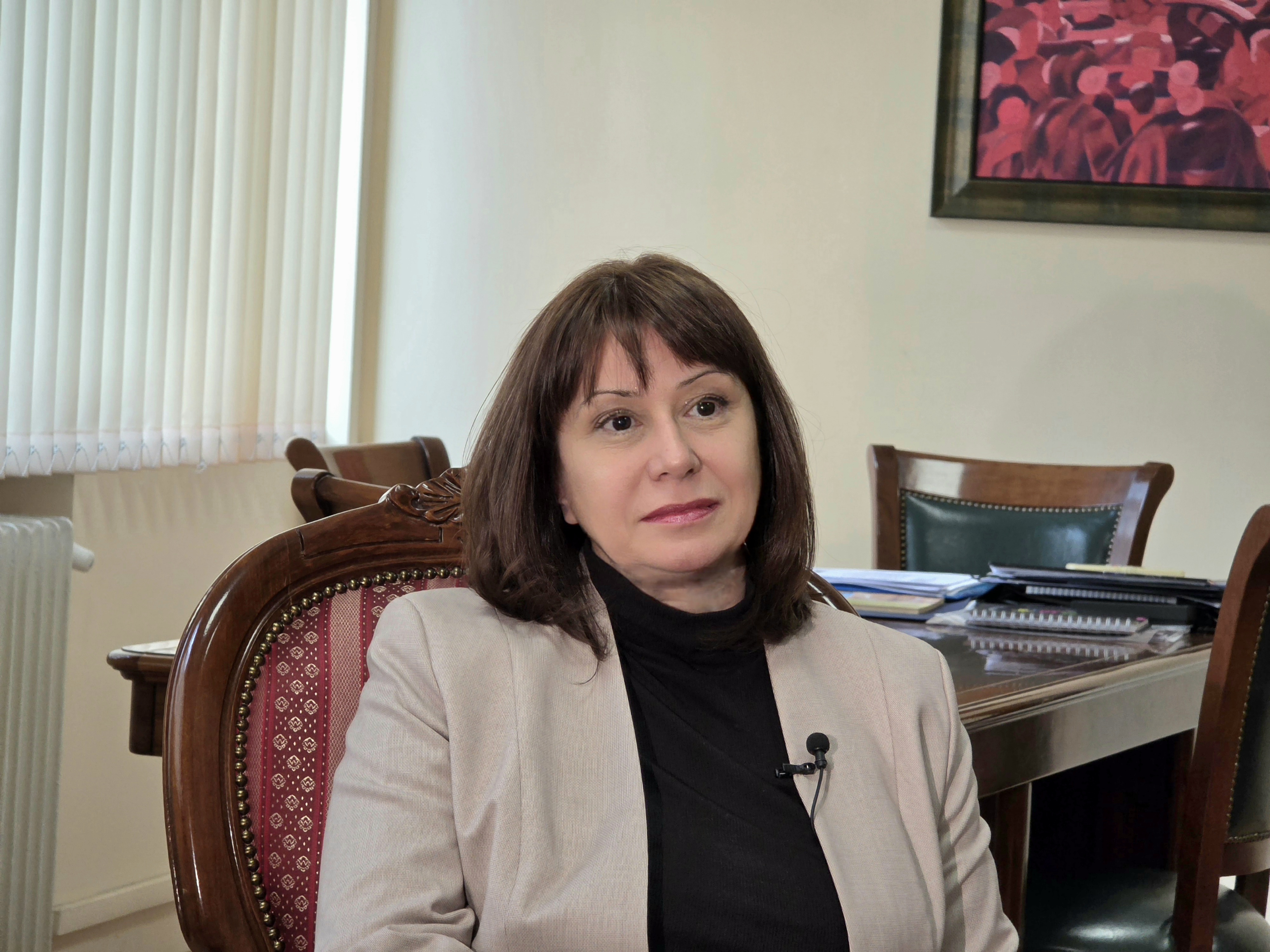
Ombudsman Velislava Delcheva sent an opinion to the Chair of the 52nd National Assembly Mihaela Dotsova and the Chair of the Committee on Labour, Social and Demographic Policy Venko Sabrutev regarding the draft Act amending and supplementing the 2026 State Budget of the Republic of Bulgaria Act.
She called for the proposed amendments to the Labour Code, contained in the transitional and final provisions of the Budget Act and relating to the method of calculating and recognising length of service, as well as the mechanism for setting the minimum wage, to be revised between the first and second readings.
According to the Ombudsman, such changes should not be adopted as part of the budgetary procedure, as they affect long-standing labour law institutes and have a direct impact on citizens’ fundamental labour and social rights.
“Given the significance of the proposed amendments to the labour rights of workers and employees, I believe they deserve to be discussed separately from the budgetary procedure, insofar as they affect long-standing labour law institutes and have an impact on the exercise of a number of labour and social security rights,” writes Velislava Delcheva.
In her opinion, the Ombudsman emphasises that the amendments to Article 355 of the Labour Code fundamentally alter the current model for calculating length of service, moving from the calendar-based principle to a calculation based on hours actually worked.
According to the Ombudsman, this is the most significant change to the rules on length of service since the Labour Code was adopted, and cannot be regarded as a supplementary amendment to the State Budget Act.
“In essence, this represents the most significant change to the rules governing length of service since the Labour Code was adopted. Given that length of service is a legal fact on which the accrual and exercise of numerous employment rights depend, such a change should be the subject of a separate public consultation and justification, rather than being introduced via the transitional and final provisions of the State Budget Act,” Delcheva states in her opinion.
She draws particular attention to the proposed change regarding the recognition of length of service for part-time workers. In her opinion, she points out that under the current regulations, a person working under an employment contract for four hours a day for one calendar year accrues one year’s length of service. Under the proposed provisions, the same actual work would be recognised as approximately six months’ length of service.
According to the Ombudsman, this could affect a significant number of workers and employees, including parents of young children, people with long-term disabilities, pensioners, students and anyone for whom part-time work is the only option for employment.
Velislava Delcheva also draws attention to another fact – there is no evaluation of how these changes would affect the right to paid annual leave, additional paid leave, additional remuneration for length of service and professional experience, compensation, the conditions for filling posts for which the law requires a certain length of service, as well as on all other rights which the legislation links to length of service.
Delcheva emphasises that the proposed rules for individuals who are simultaneously employed under more than one employment contract also raise specific issues. According to the Ombudsman, it is unclear how length of service will be calculated for each employment relationship, how the restriction that it must not exceed the calendar year will be applied, and how employers will determine the recognised length of service where there are several active employment contracts.
“The proposed amendments to Article 355 of the Labour Code represent one of the most significant reforms to the regulations governing length of service in recent decades. They directly affect the exercise of numerous labour and social rights and should therefore not be treated as ancillary amendments to the State Budget Act,” the Ombudsman said categorically.
Delcheva also draws attention to the lack of transitional provisions that explicitly stipulate that the new method of calculating length of service will apply only to service accrued after the Act comes into force. She points out that such a provision is necessary to guarantee the principles of legal certainty, predictability and the protection of acquired rights.
The Ombudsman also expresses serious reservations about the proposal to suspend the mechanism for setting the minimum wage in 2026. She emphasises that such a measure must be exceptional in nature and must be fully justified, as it affects the incomes of the lowest-paid workers.
She also notes that, whilst the minimum wage is being frozen, the bill provides for an increase in the minimum social security income and the minimum social security income for the self-employed, which creates a risk of disrupting the balance between income policy and social security policy.
“Before the amendments are adopted, it is necessary to carry out a thorough impact assessment, a wide-ranging public consultation and an analysis of their implications for all the rights that the legislation links to length of service. I believe this is one of the most important issues in the entire budget package and deserves a separate discussion, rather than being considered solely within the framework of the budgetary procedure,” adds Velislava Delcheva.
In conclusion, she calls on Members of Parliament to carefully consider all the proposed amendments to the Labour Code between the first and second readings, by holding the necessary public and expert debate and ensuring that any changes to labour legislation are in line with the principles of legal certainty, the protection of acquired rights, and the interests of workers and employees.
OMBUDSMAN'S RECEPTION-ROOM
- address: 22 George Washington str.,
1202, Sofia - phone: (+359 2) 810 6955; fax: (+359 2) 810 6963
- e-mail: priemna@ombudsman.bg
PRESS CENTER OF THE OMBUDSMAN
- phone: (+359 2) 810 6913
- e-mail: press@ombudsman.bg